Context
A system, in context.
Frontend experience at Salud Digna, inside a team. Mexico, Guatemala, El Salvador, Nicaragua and PET-CT work support the technical scope; only public interfaces are shown here.
Clear interfaces for complex patient journeys, across regional platforms.
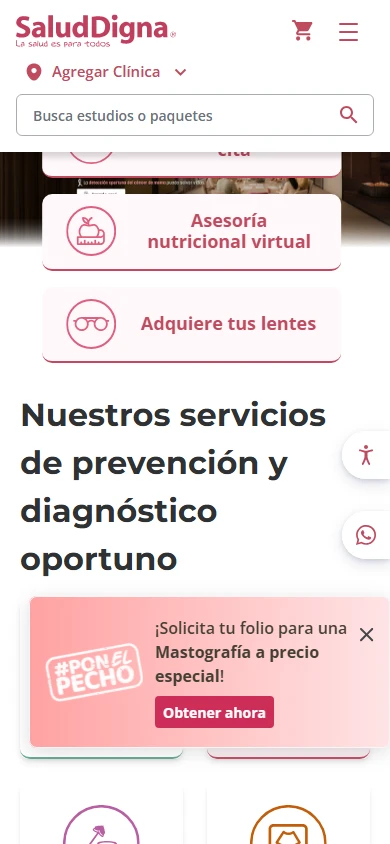
Frontend experience at Salud Digna, inside a team. Mexico, Guatemala, El Salvador, Nicaragua and PET-CT work support the technical scope; only public interfaces are shown here.
Authentication, appointments, clinic discovery and results access demand clear journeys across devices and regional requirements.
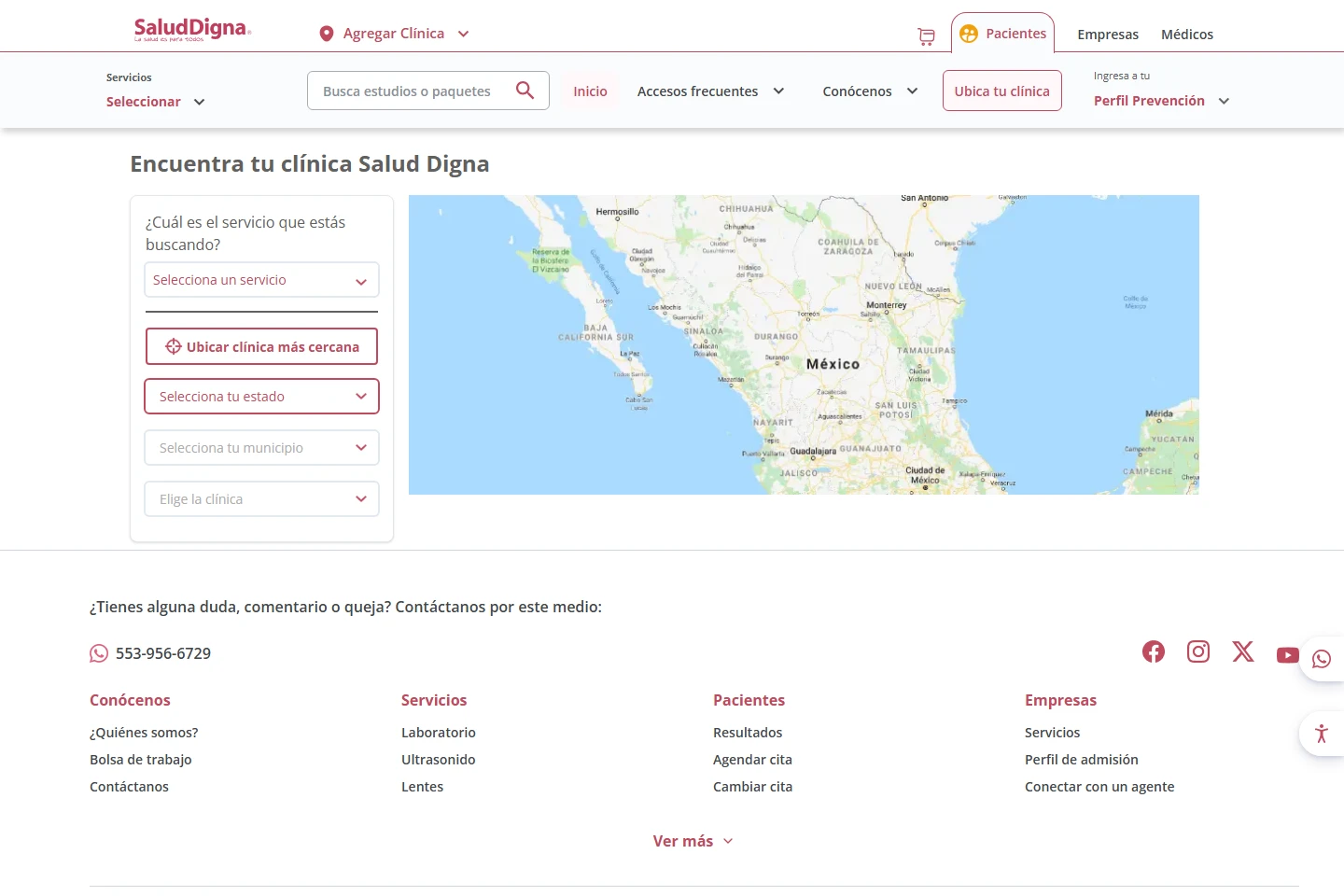
Build reusable interfaces around API-backed workflows, validate forms carefully and make complex journeys understandable on mobile.
Frontend engineering within a team. The public website is visual context, not a claim of individual authorship of every screen.
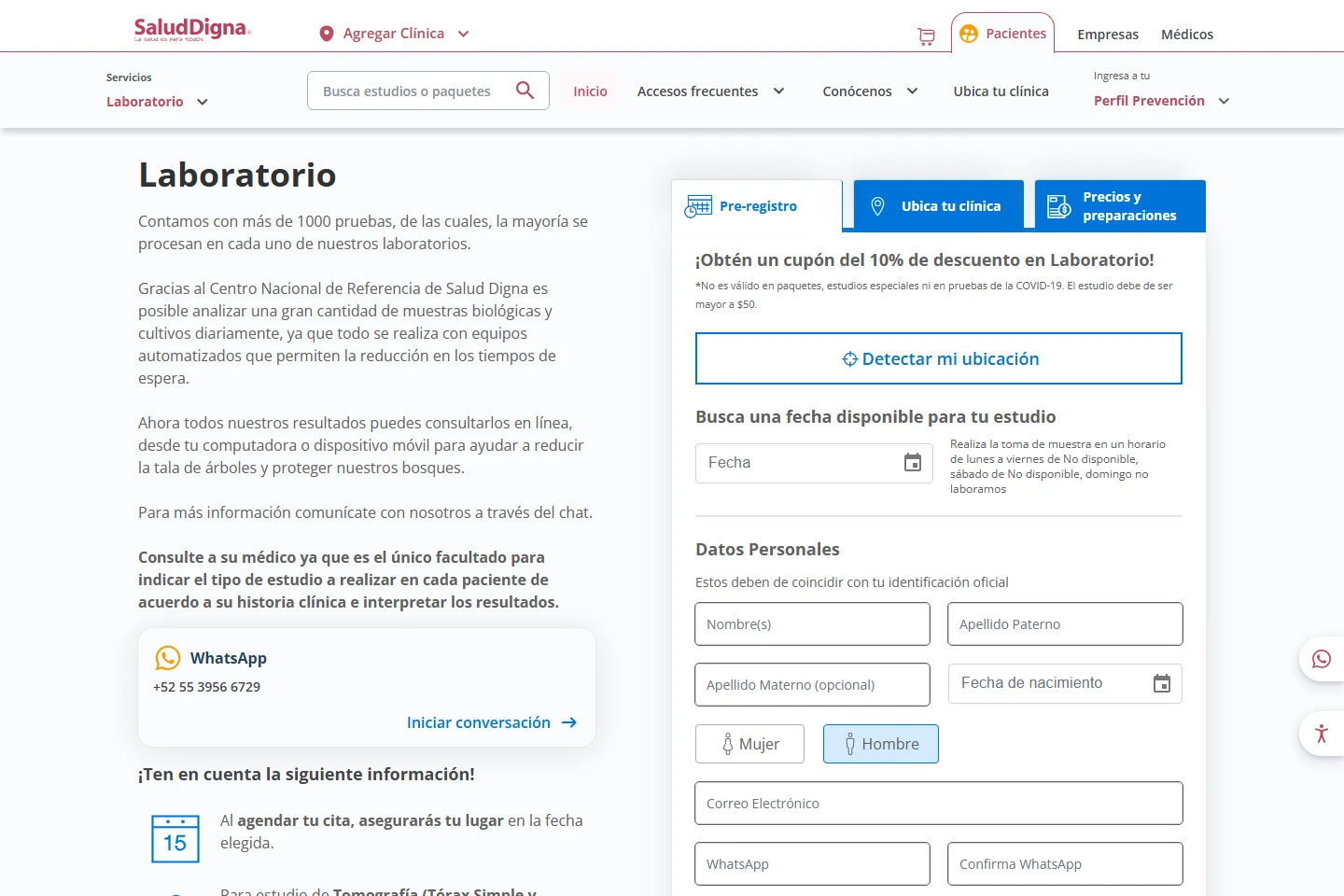 View full screenshot (new tab) ↗
Public journeys for discovery, clinics and mobile access are clearer, and the CV describes patient flows, campaigns and Gestor RH as team delivery. No patient data is shown, and the performance figures remain self-reported.
React / Next.js interfaces and regional patient-facing workflows are visible in the reviewed projects. Internal systems and patient data remain private. The CV declares 7,000+ concurrent users with zero downtime on Pon el Pecho, 90%+ Core Web Vitals and about 40% faster loads on critical views. Those figures are self-reported team results, not an independent audit.
Proprietary work. Original conceptual diagram only; no patient data, corporate source code or private infrastructure is shared.
Trust comes from clarity: predictable validation, explicit states and readable information matter most when people are seeking care.